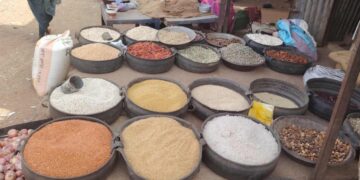
This report analyzes market dynamics in Sudan between February and July 2025, focusing on prices, availability, quality, fuel, exchange rates, and traders’ perceptions of supply, demand, profits, and market conditions. Between February and July 2025, Sudan’s markets showed mixed trends and sharp regional disparities. Cereal prices were mostly stable: wheat held steady with a short […]
Coping with crisis: Livelihood vulnerabilities and food insecurity in Sudan’s current conflict
Sudan’s conflict, reignited in April 2023, represents not just a military contest between the Sudanese Armed Forces (SAF) and the Rapid Support Forces (RSF), but a total systemic collapse that has engulfed governance, infrastructure, markets, and public services. This conflict did not arise in a vacuum. Sudan has long faced structural vulnerabilities including weak institutions, […]
Essential commodities prices, availability, and market actors’ perceptions: June 2025
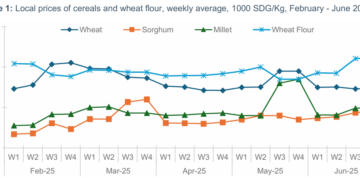
This report analyzes key market trends in Sudan from February to June 2025, focusing on the prices, availability, and quality of essential commodities—cereals, vegetables, animal products, agricultural inputs, fuel, and exchange rates. Consistent with previous editions, it reveals significant spatial and temporal disparities across Sudan’s 18 states. Cereals showed mixed trends. Wheat prices stabilized in […]
Rethinking delivery modalities in conflict-affected settings: Why beneficiaries in Sudan prefer digital transfers
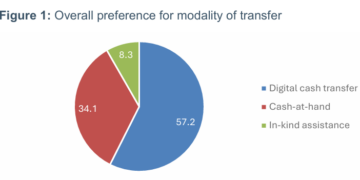
The recent surge in armed conflicts across Africa is increasing demand for humanitarian and social assistance, creating significant pressure on humanitarian actors to deliver life-saving support amid insecurity and constrained resources. The conflict that erupted in Sudan in April 2023 between the Sudanese Armed Forces (SAF) and the Rapid Support Forces (RSF) has resulted in […]
What Are the Economic and Poverty Implications for Sudan If the Conflict Continues Through 2025?
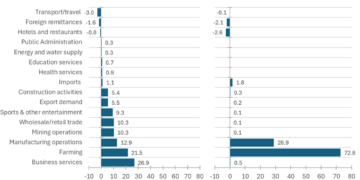
The ongoing conflict in Sudan, which began in April 2023, has triggered severe economic contractions, exacerbating poverty and unemployment while disrupting key sectors of the economy. This study employs an updated economywide database to assess the economic impact of a continued conflict through the end of 2025 under two scenarios of extreme and moderate contractions […]